


Raising Strong Kids with Authoritative Parenting: A Realistic Approach at Home begins with one simple truth. If you’re here, you’re likely a parent who wants to raise children who are kind, responsible, and independent, but without yelling or giving in all the time. That’s where authoritative parenting comes in. This balanced style blends warmth with structure: setting clear rules while explaining them and listening while staying firm. And it works. Research shows that kids raised with this approach tend to perform better in school, manage emotions effectively, and grow into capable, confident adults. Still, putting it into practice at home, through dinner meltdowns, messy rooms or homework battles, can feel challenging.
This guide will show you exactly how to apply authoritative parenting at home, step by step, with realistic examples and strategies you can start using tonight.
What Is Authoritative Parenting?

Raising Strong Kids with Authoritative Parenting is a balanced approach. It means being both responsive and firm. Parents who follow this style are warm, listen to their kids, and explain their expectations, but they also set clear rules and follow through.
Key Traits of Authoritative Parents :
- They show love and support openly.
- They explain the reasons behind rules.
- They expect effort, honesty and respect.
- They listen without losing control.
- They use discipline to teach, not punish.
Unlike other styles, authoritative parenting helps kids feel safe and confident. The goal isn’t to control your child, it’s to guide them.
Parenting Styles: A Quick Comparison
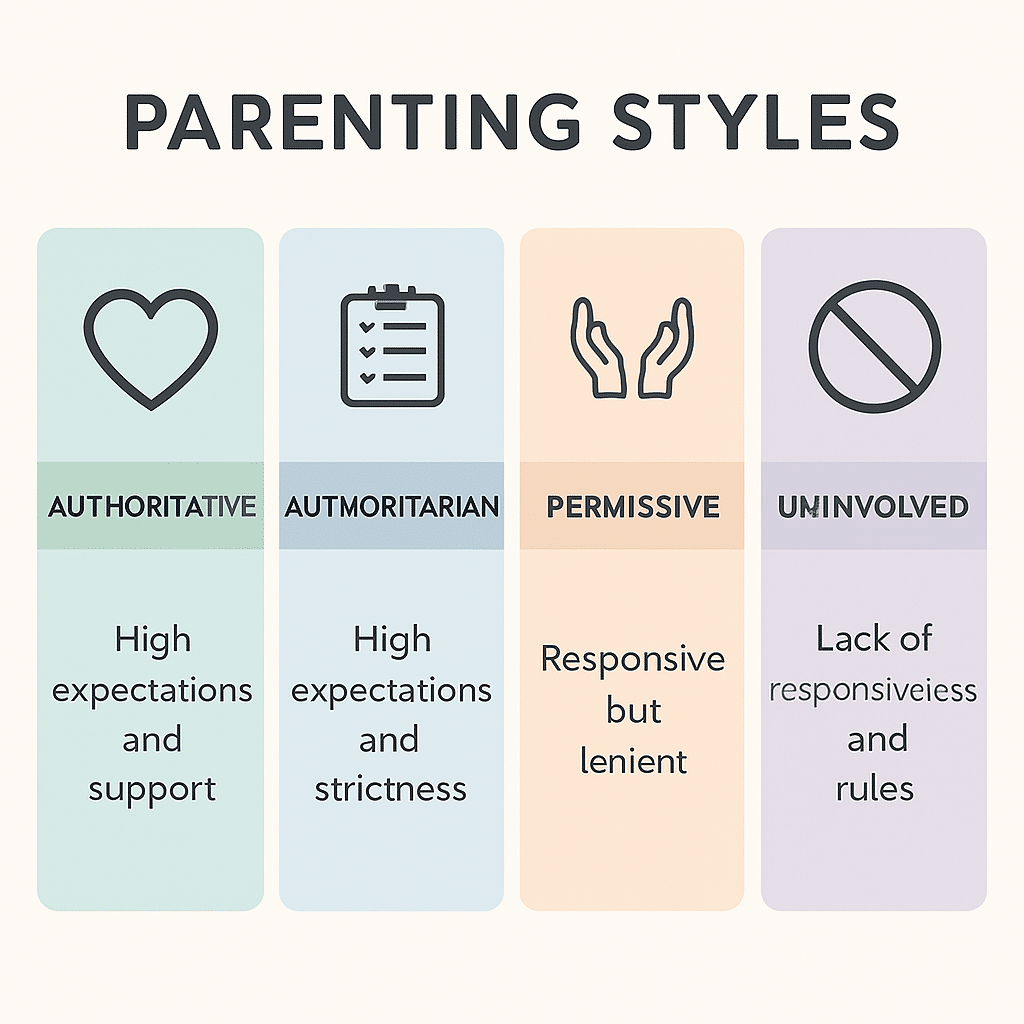
Child development experts typically identify four main parenting styles, each with distinct communication patterns, discipline approaches, and outcomes for children. Here’s a side-by-side breakdown:
| Parenting Style | Communication | Discipline Approach | Likely Outcome for the Child |
|---|---|---|---|
| Authoritative | Open, clear, and respectful | Teaches through logical consequences | Confident, responsible, emotionally resilient |
| Authoritarian | Demanding, with minimal dialogue | Strict and often punitive | Obedient but anxious, less independent |
| Permissive | Warm but lacks clear boundaries | Rarely enforced | Difficulty following rules, low self-control |
| Uninvolved | Minimal interaction | Inconsistent or absent | Poor academic performance, emotional challenges |
Key Insight:
Authoritative parenting is widely regarded by psychologists as the most effective style. It strikes a healthy balance between structure and empathy, helping children grow into secure, capable individuals.
Why Authoritative Parenting Is Worth It
RaisingChildren.net.au“Research from RaisingChildren.net.au, shows that guided autonomy strengthens self-esteem and emotional growth.” Great fit in the evidence paragraph about the benefits of independence.
Children raised in authoritative homes tend to:
- Have higher self-esteem
- Build strong social skills
- Do well in school
- Develop self-control
- Handle stress more effectively
- Show respect for rules and themselves
These long-term benefits come from the daily choices parents make, like how you speak, listen, and set expectations.
Next, we’ll move into the heart of this guide: how to actually apply these ideas at home.
Pillars of Authoritative Parenting at Home
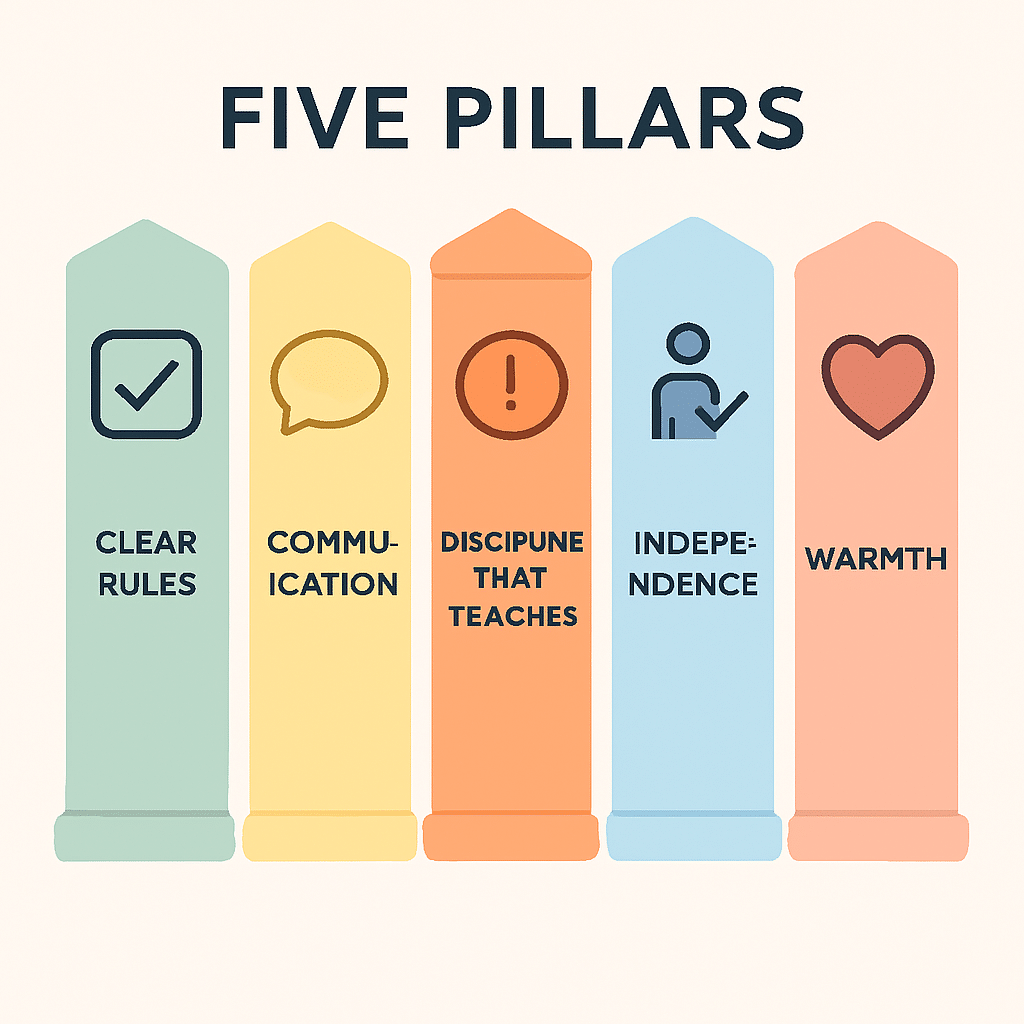
These five pillars form the core habits of authoritative parents. They’re simple to understand, and powerful when practiced consistently.
1. Establish Clear Boundaries & Consistent Rules
Kids feel more secure when they know what to expect. Set clear, age-appropriate rules and explain the reasons behind them.
- Say: “You need to brush your teeth before bed to keep them healthy.”
- Be consistent: Don’t let the rule slide just because you’re tired.
- Follow through with logical consequences: “If you don’t brush, no story tonight.”
2. Foster Open Communication & Validate Emotions
- Create a space where your child feels heard, even if you disagree.
- Listen fully before responding.
- Reflect their feelings: “You’re upset because your game time ended. I get that.”
- Avoid dismissing emotions with phrases like “You’re fine” or “Stop crying.”
Validation builds trust. And when kids feel safe emotionally, they’re more likely to cooperate.
3. Use Discipline That Teaches, Not Punishes
Discipline should help kids learn, not feel ashamed.
- Use natural consequences when possible: “If you forget your lunch, you’ll be hungry.”
- Choose logical consequences: “If you hit, you’ll lose playtime until you can use your words.”
- Stay calm: Reacting with anger teaches fear, not responsibility.
4. Encourage Independence & Autonomy
- Let your child make choices, take small risks, and solve problems.
- Offer controlled choices: “Do you want to do homework before or after dinner?”
- Allow age-appropriate freedom: Let them dress themselves, even if it’s mismatched.
- Avoid rescuing too quickly: Let them try, fail, and try again.
This builds confidence and problem-solving skills.
5. Maintain a Foundation of Warmth & Support
- Love should be felt every day, especially during tough moments.
- Use hugs, eye contact, and encouraging words.
- Spend one-on-one time regularly, even if it’s short.
- Show interest in their thoughts and activities.
When kids feel connected, they’re more likely to respect your rules and values.
Authoritative Parenting in Action: A Guide by Age
Parenting strategies look different depending on your child’s age. Here’s how to apply authoritative parenting at every stage.
- Focus on safety, structure, and emotion coaching.
- Keep it simple: Use short phrases and clear routines.
- Set firm rules around safety: “You can’t touch the stove. It’s hot.”
- Validate big feelings: “You’re mad because I said no. That’s okay. I’m here.”
- Redirect instead of punishing: “You can’t throw blocks, but you can throw this soft ball.”
Toddlers thrive with predictability and loving firmness.

For School-Aged Kids (Ages 5–12)
This is the time to build habits, responsibility, and mutual respect.
- Use logical consequences: “If you forget your homework, you’ll need to explain it to your teacher.”
- Problem-solve together: “What can we do to make mornings less rushed?”
- Explain the “why”: Kids this age want to understand the purpose behind rules.
- Let them earn more responsibility: Tie privileges (like screen time) to responsibility (like chores).
This stage is about guiding, not controlling.
For Teenagers (Ages 13+)
Teens need boundaries, but they also need to feel heard and respected.
- Negotiate and compromise: “I’ll extend curfew if you keep me updated and come home on time.”
- Respect their need for privacy: Knock before entering their room.
- Be clear but calm with discipline: “You broke trust. You’ll need to rebuild it before you can go out again.”
- Stay connected emotionally: Make time for real conversations, even if they roll their eyes at first.
Teens test limits, but they still want your approval and guidance.
Your “At-Home” Cheat Sheet: Scripts for Common Scenarios
Real-life parenting means messy moments. Here’s how to respond with authority, empathy, and clarity, using simple language you can say out loud.

The Screen Time Battle
Instead of this: “Turn it off now or you lose it for a week!”
Try this: “You’ve had your 30 minutes. You can finish that level, then it’s time to log off. If you don’t, there won’t be screen time tomorrow.”
The Messy Room Standoff
Instead of this: “This room is disgusting! You never listen!”
Try this: “I need your clothes picked up before dinner. If it’s not done, your tablet stays off until it is. Let me know if you need help getting started.”
The Sibling Squabble
Instead of this:
“Who started it this time?!”
Try this:
“I hear yelling. That tells me there’s a problem. I need both of you to cool off in separate rooms. We’ll talk when you’re ready to problem-solve together.”
The Homework Refusal
Instead of this:
“If you don’t do your homework, you’re grounded!”
Try this:
“Homework is your responsibility. If it’s not done, the teacher will see it, and you’ll have to explain. I’m here if you get stuck.”
These scripts show how to stay firm while keeping the relationship strong. You’re teaching boundaries, not just enforcing rules.
Overcoming the Challenges: What to Do When It Gets Hard
Authoritative parenting is simple in theory, but life isn’t always simple. Here’s how to handle the rough spots without giving up.

“What if my partner and I don’t agree on parenting?”
You’re not alone. Different upbringings shape how each parent approaches discipline. Start with shared goals: “We both want respectful, kind kids.” Then talk about what rules matter most to each of you, and where you can meet in the middle. Use “I” statements instead of blame: “I feel confused when we handle bedtime differently. Can we agree on one plan so the kids get a clear message?”.
Consistency between adults builds security for the child.
“I was raised differently. Can I really change?”
Yes. Many parents break old patterns, it starts with awareness. You may catch yourself shouting or giving in out of habit. That’s okay. Pause, own it, and reset. Say:“I didn’t handle that how I wanted. Let’s try again.”
Change isn’t instant, but it is possible. Keep practicing. Your child will notice.
“I’m too tired to be consistent. What now?”
Every parent feels this:
- Start small.
- Pick one rule, bedtime, screen limits, whatever matters most and stick to it.
- Let other things go when needed. It’s okay to simplify.
- Also: ask for help. You don’t need to be perfect, just present.
- Use reminders like:“Connection before correction.”or“My calm helps their calm.”
Challenges are part of parenting. What matters is showing up, staying real, and trying again tomorrow.
Frequently Asked Questions
How do you set clear boundaries?
Be direct. Use simple language. Be consistent. Explain the rule and what happens if it’s broken — every time.
What is inductive discipline?
It means helping the child understand the effect of their behavior:“When you hit, it hurts. We use words when we’re upset.”
How is authoritative different from authoritarian parenting?
Authoritative parents explain rules and listen. Authoritarian parents demand obedience and often punish harshly.
Is authoritative parenting the best style?
According to experts, yes. Research shows it leads to the healthiest outcomes in terms of behavior, emotional development, and academic success.
What are the 4 types of parenting?
1. Authoritative – Balanced: high warmth + high expectations2. Authoritarian – Strict and controlling3. Permissive – Warm but with few rules4. Uninvolved – Detached or inconsistent
What are the characteristics of an authoritative parent?
Warm and responsiveSets clear expectationsExplains the “why”Uses discipline to teachEncourages independence
How do you discipline as an authoritative parent?
Use logical or natural consequences. Stay calm and explain the reason behind the rule. Avoid threats or yelling.
How do you discipline as an authoritative parent?
Use logical or natural consequences. Stay calm and explain the reason behind the rule. Avoid threats or yelling.
What is an example of authoritative parenting?
Telling your child: “I understand you’re upset about bedtime, but it’s time to sleep so you can feel good tomorrow. You can choose which pajamas to wear.”This shows empathy, offers choice, and keeps the boundary.
Final Thoughts: You’ve Got This
Authoritative parenting isn’t about being perfect. It’s about showing love and leadership every day. Your calm voice, your steady rules, your listening ear, they shape your child more than any single moment. The journey will have setbacks. That’s normal. Keep showing up. Keep practicing. Your effort builds a home where your child can thrive.