
Learning Beyond the Classroom
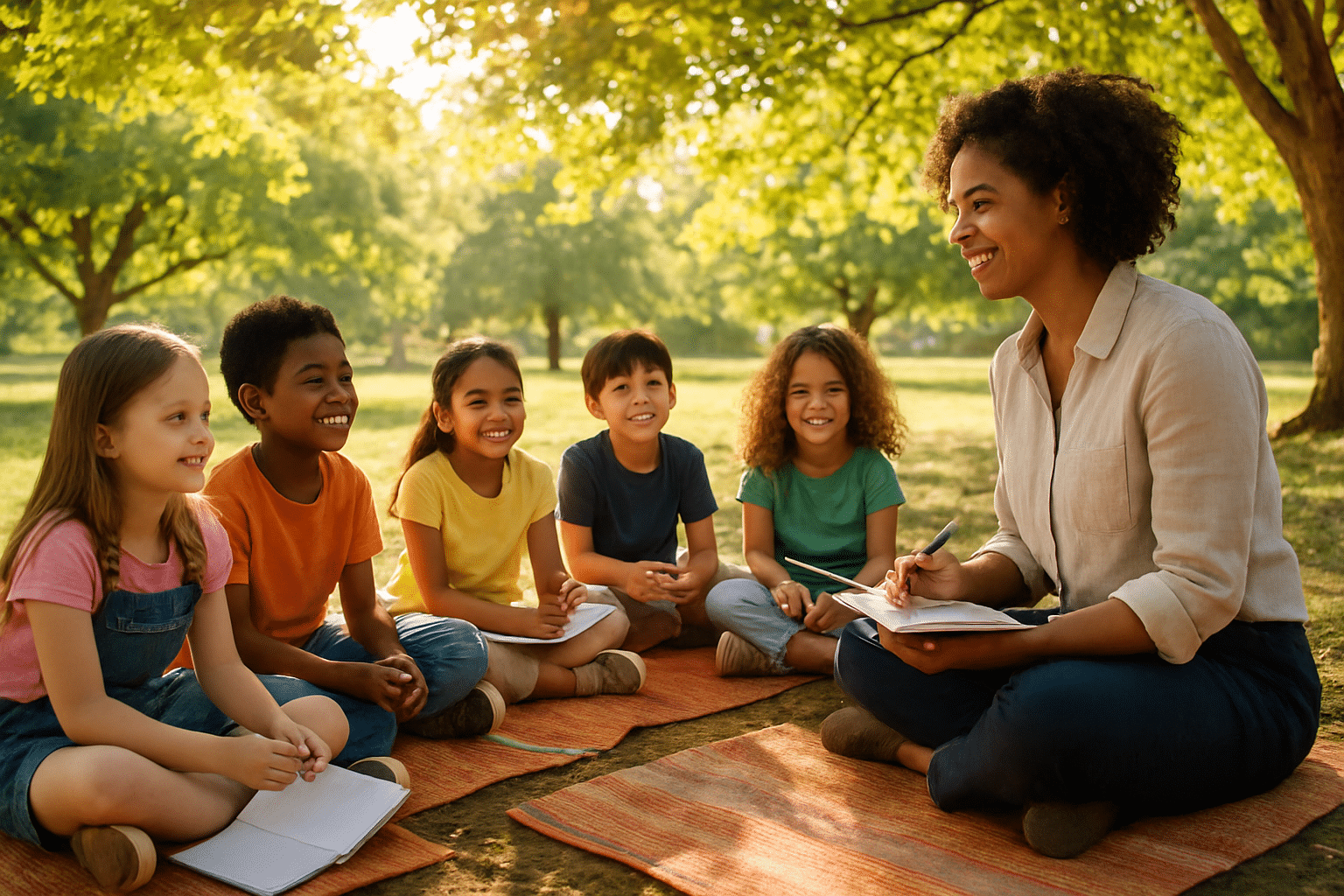
Outdoor learning transforms a simple day outside into a powerful educational experience. Through educational activities for kids in outdoor classes, children explore, question, and connect with the world in authentic ways.Fresh air and open space spark curiosity, movement, and creativity, making lessons memorable and joyful.
Learn more about outdoor education principles at the National Environmental Education Foundation.
Why Educational Activities for Kids in Outdoor Classes Matter
Children learn best when they move, explore, and touch what they’re studying. Outdoor classes awaken the senses, children hear the wind, feel textures, and observe living systems firsthand.These experiences foster:
- Deeper engagement with learning content.
- Improved focus and stress reduction.
- Better teamwork and social connection.
- Environmental awareness and empathy.
Outdoor education isn’t just a trend, it’s a holistic approach proven to boost cognitive, emotional, and physical development.
For more insights, see the U.S. Department of Education: Outdoor Learning Benefits.
Setting the Scene: How to Organize Outdoor Classes
Before you dive into activities, plan your space and safety:
- Choose a safe, accessible area: schoolyard, park, or garden.
- Prepare portable materials: notebooks, magnifying glasses, clipboards.
- Set clear expectations: respect nature, share tools, listen to each other.
- Integrate reflection time: let kids discuss what they felt or noticed.
Encourage curiosity, not perfection. Outdoor learning thrives on discovery and flexibility.
For practical ideas on outdoor classroom setup, explore Project Learning Tree’s educator resources.
Nature Observation Journals
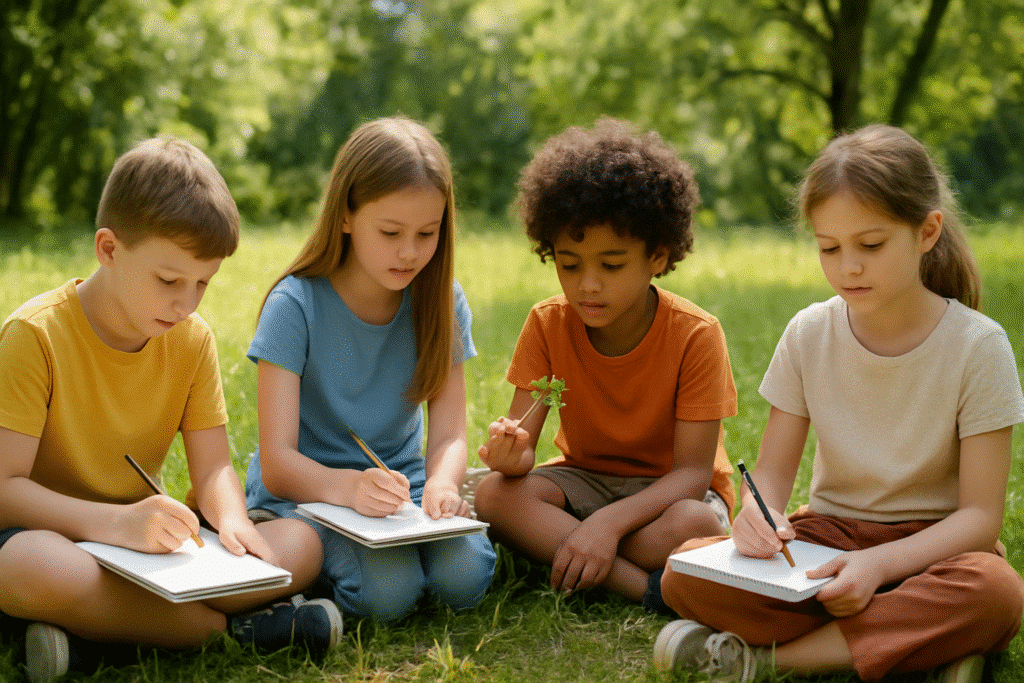
Invite children to become young scientists. Each child keeps a nature observation journal, recording animals, plants, sounds, and weather patterns.
Younger kids can draw what they see.
Older kids can note behaviors or sketch ecosystems.
Learning goals: patience, focus, and descriptive writing skills.
Tip:
Compare entries from different days to notice seasonal changes.
See Smithsonian Science Education Center: Observing Nature for age-appropriate nature journaling activities.
Math in Motion: Counting and Measuring in Nature
Math becomes fun when kids count tree rings, measure leaves, or compare the height of plants.
Example activities:
- Leaf symmetry challenge: measure and classify shapes.
- Shadow tracing: measure shadows at different times of day.
- Counting games: estimate bird sightings or types of flowers.
For outdoor STEM integration, check National Science Teaching Association resources.
These educational outdoor activities for kids transform abstract math into living reality.
Creative Language Games Outside
Outdoor spaces are full of inspiration for writing and speaking. Try:
- Nature poems: describe what you hear, smell, or see.
- Story circles: create group stories starting with “Once in this forest…”.
- Word scavenger hunts: find items starting with specific letters
Integrating language learning into educational activities for kids in outdoor classes builds both literacy and imagination.
Find outdoor storytelling activities at National Literacy Trust.
Science Explorations and Mini Experiments
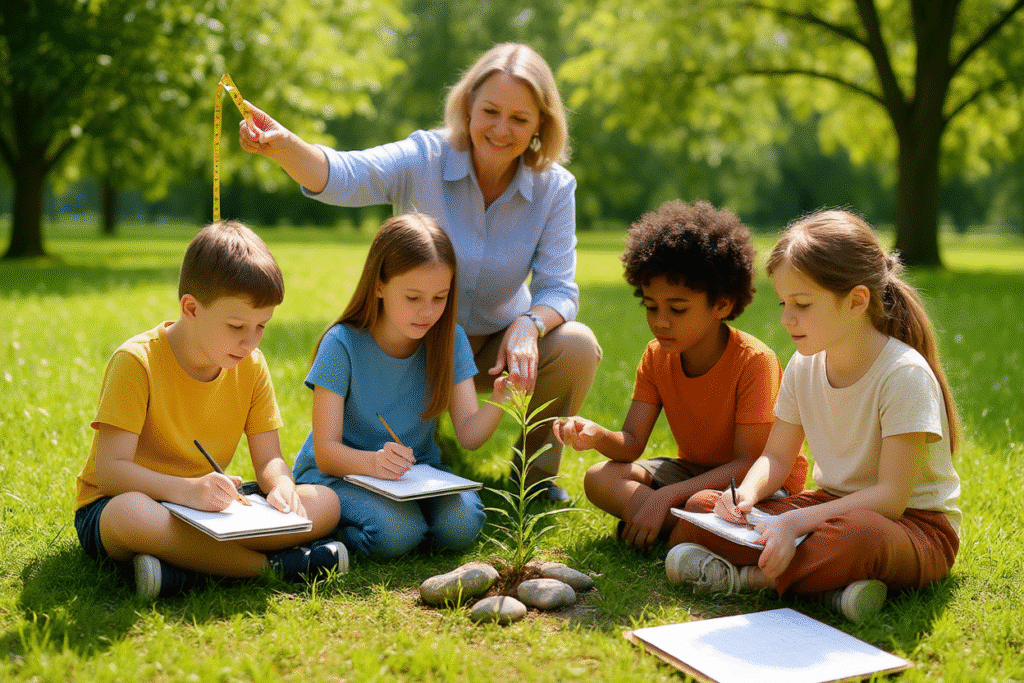
Turn outdoor classes into small research labs:
- Test soil types and pH.
- Observe insect habitats.
- Compare plant growth in shade vs. sunlight.
- Create simple water cycle models with clear bags.
Children learn to hypothesize, observe, and reflect, core scientific thinking steps. Keep it safe, hands-on, and age-appropriate.
Explore ideas from NASA Climate Kids for outdoor science projects.
Team Challenges and Cooperative Games
Outdoor learning also builds social-emotional skills.Ideas include:
- Treasure hunts: follow map clues to practice problem-solving.
- Team obstacle courses: emphasize cooperation and encouragement.
- Eco-missions: groups clean small areas, learning responsibility.
Each challenge blends movement, teamwork, and joy, perfect for emotional regulation and inclusion.
Discover teamwork-based activities from UNICEF’s PlayLab Learning.
Tips for Teachers and Educators
Teachers play a key role in making educational activities for kids in outdoor classes both structured and meaningful. Here are practical tips to guide success:
1. Blend Curriculum with Nature
Map your goals to natural settings, a science lesson can happen in a garden, a math lesson on measuring tree height, and an art session in a park.
See Teach Outside the Classroom Toolkit.
2. Encourage Discovery, Not Perfection
Let students explore freely. Outdoor learning is about curiosity, not rigid outcomes. Celebrate questions and surprises.
3. Use Reflective Questions
After each activity, ask:
- “What did you learn today?”.
- “How did this make you feel?”
- “What did nature teach us about teamwork?”
Reflection helps kids integrate learning emotionally and cognitively.
4. Plan for All Seasons
Outdoor learning isn’t just for sunny days. Light rain, wind, or clouds offer sensory-rich experiences, if prepared with proper clothing.
5. Collaborate with Other Teachers
Integrate outdoor lessons across subjects: science, literature, art, and social studies.For example, an English teacher can pair with a biology teacher for a “poems from the forest” session.
6. Document and Share
Encourage students to take photos or videos of their findings, then discuss or write about them in class. This bridges outdoor exploration with digital literacy.
7. Safety and Inclusivity First
Check for allergies, accessibility needs, and ensure every child feels confident participating. Use buddy systems to promote peer support.
Tip for educators:
Keep a simple “Outdoor Class Journal”, record what worked, what children enjoyed most, and new ideas to try next time.
Mindfulness and Art in Nature
Invite calm and creativity with nature-based mindfulness:
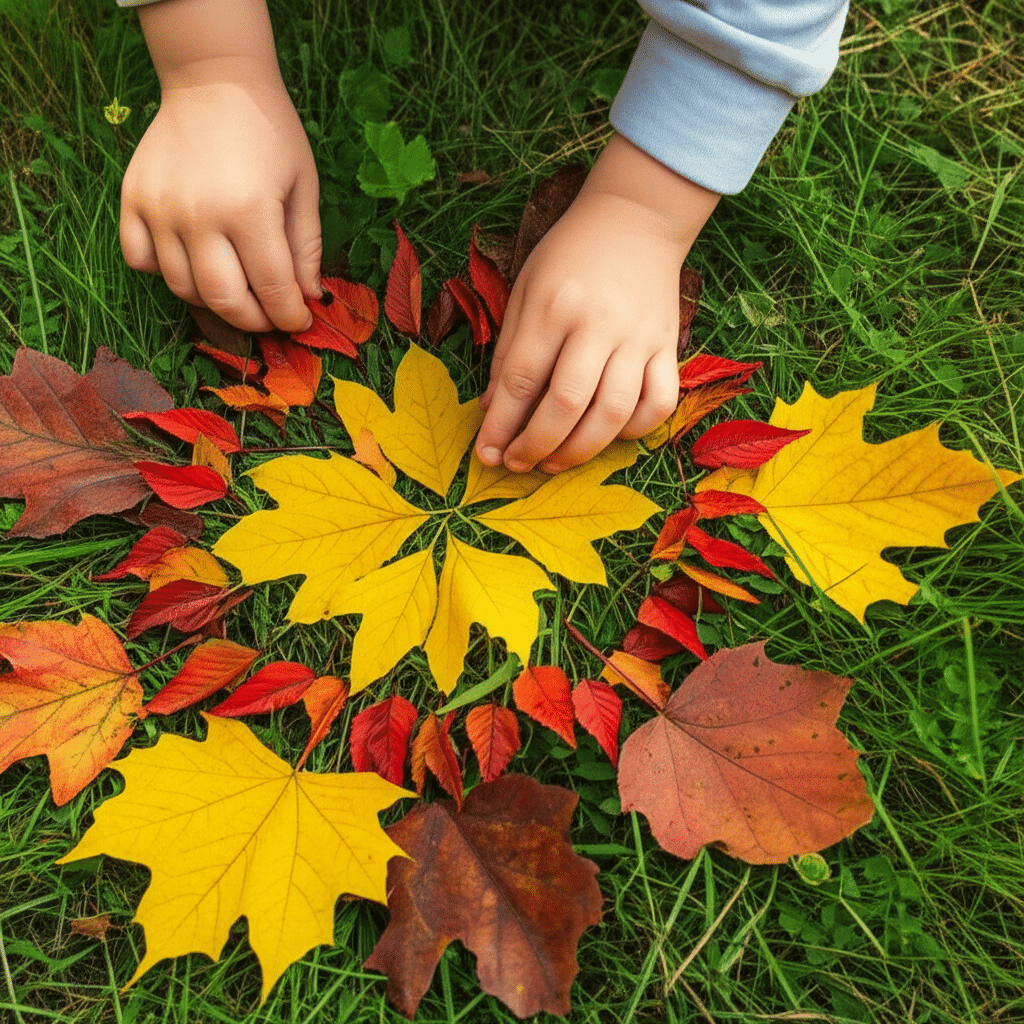
- Leaf mandalas made with found items.
- Quiet listening walks to notice natural sounds.
- Outdoor painting using natural pigments.
These reflective educational activities for kids in outdoor classes support emotional awareness and gratitude for the environment.
For mindfulness and nature art, check Mindful Schools Outdoor Practices.
Reflection and Connection: What Kids Learn Outdoors
Outdoor classes strengthen more than academic knowledge:
- Self-confidence through discovery.
- Empathy by caring for living things.
- Resilience through changing weather and problem-solving.
Encourage children to share reflections verbally or in journals. Ask:
“What did you learn from nature today , about yourself, your friends, or the world?”
8For holistic reflection practices, explore Children & Nature Network.
FAQs About Educational Activities for Kids in Outdoor Classes
What are attachment wounds, and how do they form?
Attachment wounds form when a child’s need for comfort, protection, or attention isn’t met consistently. These early emotional injuries can lead to struggles with trust, closeness, or self-worth in adulthood.
Can attachment wounds be healed in adulthood?
Yes. The brain remains adaptable throughout life. Through therapy, self-compassion, and safe, consistent relationships, it’s possible to heal and form secure attachments.
How do attachment wounds affect parenting?
Unhealed wounds can cause parents to overreact or withdraw when their child needs comfort. Becoming aware of your triggers allows you to respond with empathy and build a more secure bond with your child.
What does “reparenting” mean in healing?
Reparenting means giving yourself the care, patience, and kindness you may have missed as a child. It’s about meeting your emotional needs with the same love you’d offer your own child.
Can relationships help heal attachment wounds?
Absolutely. Safe, emotionally consistent relationships rewire the brain for trust and connection. Every time someone shows up with empathy and reliability, your nervous system learns that love can be safe again.
How do I know if I’m healing?
You’ll notice subtle changes: calmer reactions, clearer communication, deeper self-trust, and softer self-talk. Healing isn’t about perfection, it’s about progress and presence.
Learning with Heart and Hands
When learning moves outdoors, education becomes alive. The classroom walls fade, and the world itself becomes the textbook, filled with textures, colors, and sounds that ignite curiosity. Through educational activities for kids in outdoor classes, children discover that learning isn’t limited to paper and screens; it grows naturally from their senses, their questions, and their joy of discovery.
In nature, lessons breathe.
A leaf becomes a science experiment, a stone becomes a counting tool and a quiet breeze becomes a moment of mindfulness. Children begin to understand not only how things work but also how they feel about what they’re learning. This emotional connection makes knowledge last, it’s no longer memorized, it’s lived.
When kids plant seeds, they learn patience and responsibility.
When they write poems under the sky, they find their creative voice.
When they solve outdoor riddles or build something with friends, they strengthen teamwork and problem-solving skills.
Each experience shapes both the mind and the heart, creating confident, empathetic learners who feel connected to the world around them.
For teachers, outdoor learning is a gentle reminder: every breeze, every question, and every smile can become a teaching moment. For parents, it’s an invitation to slow down and see learning through their child’s eyes, not as a task, but as a shared adventure.
The most meaningful education happens when curiosity meets compassion, when minds stay open, and when hands get a little dirty.
That’s the essence of learning with heart and hands, nurturing not just what children know, but who they become.
Next in this trilogy: Outdoor Learning Activities for Kids: Building Curiosity and Life Skills Naturally