
This is Part 2 of our trilogy on parenting an autistic child. In Part 1, we explored what autism means and how to handle the emotional shock after diagnosis. Now we move into everyday life: mornings, mealtimes, meltdowns, homework, and school meetings.
Parenting an autistic child in daily life is less about being perfect and more about building routines, environments, and communication styles that actually fit your child. Small adjustments can reduce stress for everyone at home.
Routines: Creating Predictable, Kinder Days
Autistic children often feel safer when life is predictable. Many parents notice that parenting an autistic child becomes easier when they create gentle routines instead of relying on constant “verbal instructions” or last-minute changes.
Why Predictability Helps
For many autistic kids, each unexpected change feels like a little shock to the nervous system. Routines:
- Reduce anxiety because your child knows what comes next.
- Make transitions smoother (waking up, going to school, bedtime).
- Help you as a parent feel more organized and less reactive.
When parenting an autistic child, think of routines as support, not rigid rules. They can be flexible when needed.
Practical Routine Ideas
Some simple tools:
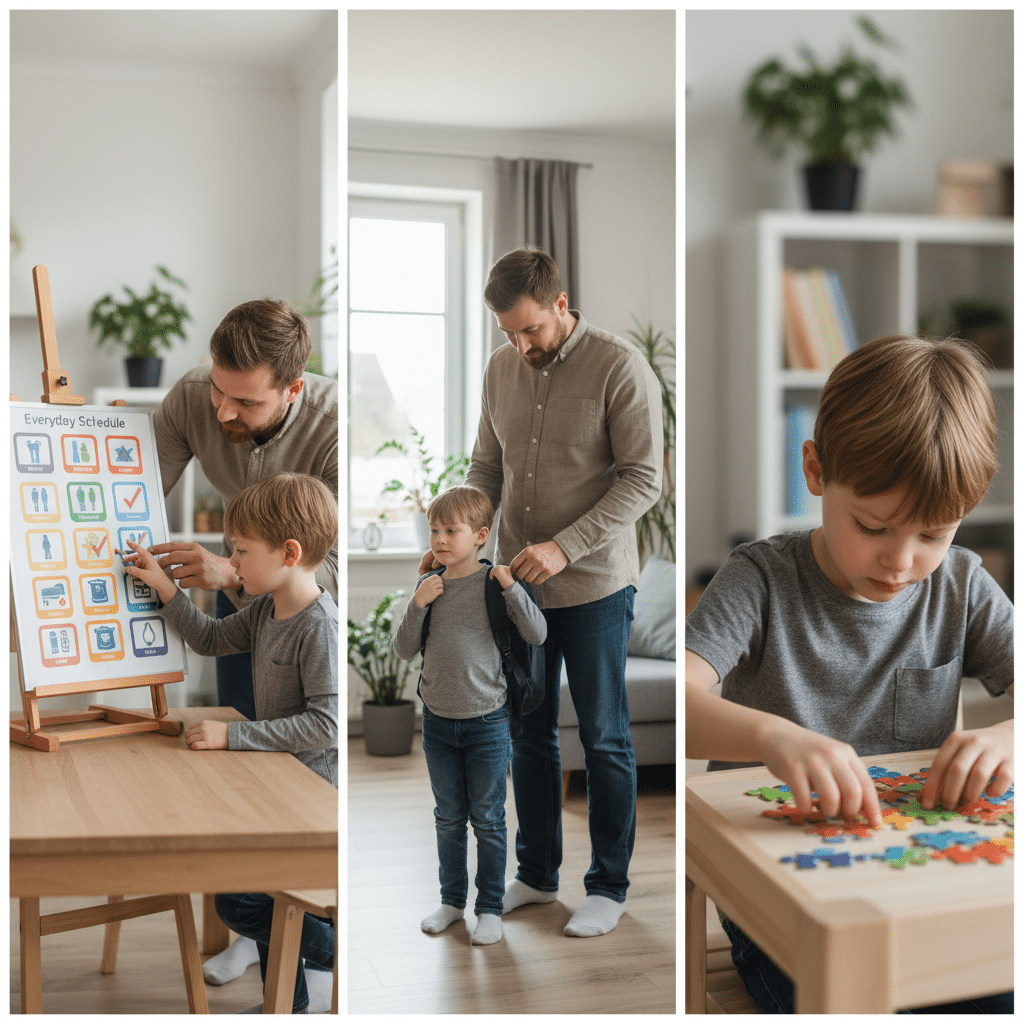
Visual schedules:
Use pictures or icons to show the day: wake up, get dressed, breakfast, school, playtime, dinner, bath, bedtime. You can make them with printed images, drawings, or apps.
Countdowns for transitions:
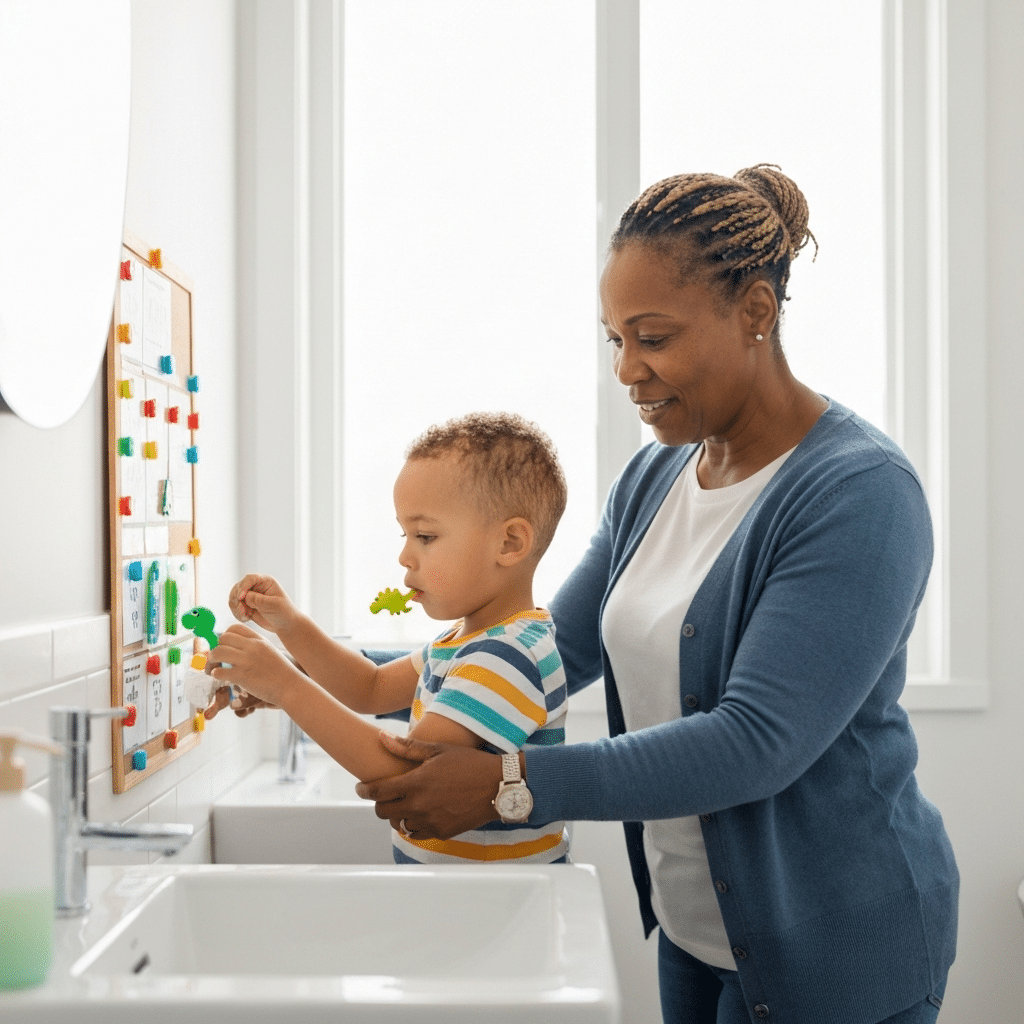
Many autistic children struggle when something stops suddenly. Try:“In 5 minutes we’ll turn off the tablet and go to the bathroom,” then “2 minutes,” then “1 minute,” using a visual timer if possible.
Consistent sleep rituals:
Same order each evening: bath → pajamas → story → lights out. The repetition can help the brain and body wind down.
Supporting Sensory Needs at Home
When you’re parenting an autistic child, many “behavior problems” are actually sensory discomfort or overload. Your child might feel attacked by noises, lights, smells, or textures that other people barely notice.
Spotting Sensory Overload
Ask yourself:
- Does my child cover their ears or run away when it’s noisy?
- Do they complain about clothing (tags, seams, fabrics) or refuse certain shoes?
- Do bright lights, crowded places, or strong smells quickly upset them?
- Do they chew, rock, spin, flap, or jump a lot to feel better?
These behaviors are not “being difficult.” They’re self-protection or self-regulation.
Making Your Home More Sensory-Friendly
Small changes can make a big difference when parenting an autistic child:
Create a “calm corner” with soft lighting, cushions, maybe a tent or canopy, and simple sensory tools (fidget toys, squishy balls, a soft blanket, maybe a weighted blanket if advised by a professional).
Offer noise-reducing headphones or earmuffs in noisy places (kitchen while cooking, vacuuming, supermarket, family gatherings).
Let your child help choose comfortable clothes and remove tags or itchy labels.
Allow movement breaks: jumping on a mini trampoline, swinging, dancing, climbing, or just pacing around.
Communicating in Ways Your Child Understands
Parenting an autistic child often means adjusting how you communicate, not just asking your child to change.
Clear, Concrete Communication
Many autistic children struggle with vague language, hidden meanings, or sarcasm. Try:
Short, clear sentences:
“Put the shoes in the box,” instead of “Could you tidy things up a bit?”
One step at a time:
Say “First brush teeth,” then when that’s done, “Now put on pajamas.”
Fewer words in stressful moments:
When your child is upset, long speeches can overload them.
Pair words with visuals:
Point, show a picture, use a gesture, or write a simple list.
Supporting Non-Speaking or Minimally Speaking Children
If your child is minimally speaking or non-speaking, it does not mean they don’t understand or think. Many autistic people understand far more than they can express with speech.
You can explore AAC (augmentative and alternative communication):
- Picture exchange systems.
- Communication apps on tablets.
- Simple sign support or gesture systems
When parenting an autistic child, remember: the goal is communication, not just speech. All forms of communication are valid.
Parenting an Autistic Child Through Meltdowns
Even with great routines and sensory supports, meltdowns are going to happen. They are not tantrums designed to manipulate you, they are signs that your child’s system is overwhelmed.
During the Meltdown
In the middle of a meltdown:
- Focus on safety first. Move objects that could hurt someone, give space.
- Keep your voice calm and low. Fewer words are better: “You’re safe. I’m here.”
- Reduce sensory input: turn down lights, lower noise, move away from crowds if possible.
- Don’t try to teach or discipline in that moment. Their brain is in “survival mode,” not “learning mode.”
When parenting an autistic child, your calm presence during a meltdown is more powerful than any perfect sentence.

After the Meltdown
Once everyone is calmer:
- Comfort your child (if they enjoy touch) or simply sit nearby if they don’t.
- Briefly reflect on what happened: Was it too noisy, too bright, too long, too sudden, too many people?
- Make small changes to routines or environments based on what you learned.
You can also take a moment for yourself, breathe, drink some water, step into another room if it’s safe to do so.
Working With Schools and Professionals
Parenting an autistic child is easier when you’re not trying to do everything alone. Schools and professionals can be partners, if you know how to communicate with them.

Building a Team Around Your Child
Your team might include:
- Teachers and special educators.
- School psychologists or counselors.
- Occupational therapists.
- Speech-language therapists.
- Pediatricians or developmental specialists.
Before a meeting:
- Write down your child’s strengths, challenges, and what works at home.
- Prepare 3–5 key concerns or questions so you don’t feel overwhelmed.
- Bring any reports or letters from professionals.
During the meeting:
- Ask for specific examples instead of vague terms like “disruptive” or “uncooperative.”
- Ask, “What supports can we add?” instead of only focusing on problems.
- Request a written summary of what was decided.
Remember: when you are parenting an autistic child, you are not being “difficult” for asking questions. You are doing your job as an advocate.
Choosing Therapies and Supports With Care
There is no one-size-fits-all therapy. When parenting an autistic child, look for supports that:
- Respect your child’s dignity and consent.
- Focus on communication, emotional regulation, life skills, and meaningful participation.
- Do not use fear, shame, or punishment to force “normal” behavior.
Red flags might include:
- Programs that promise to “cure” autism.
- Approaches that ignore your child’s distress in the name of compliance.
- Therapies that leave your child consistently more anxious or withdrawn.
You are allowed to:
- Ask for evidence and long-term outcomes.
- Get a second opinion.
- Stop or change a therapy that doesn’t feel right.
FAQs About Everyday Parenting an Autistic Child: Routines, Sensory & School
How can I make daily routines easier when parenting an autistic child?
Daily routines get easier when they are predictable and visual. Use simple schedules with pictures or icons, give countdown warnings before transitions, and keep mornings and bedtimes as similar as possible. Parenting an autistic child is smoother when your child knows what comes next and feels safe in the structure you create.
What can I do during a meltdown?
During a meltdown, your child is overwhelmed, not “being bad.” Stay as calm as you can, prioritize safety, reduce noise and visual stimulation, and avoid lecturing or punishing. After things are calm, you can gently explore what triggered the meltdown. Parenting an autistic child through meltdowns is about support and understanding, not control.
How do I support my autistic child’s sensory needs at home?
Observe how your child reacts to sound, light, touch, and crowds. Parenting an autistic child often includes creating a sensory-friendly home: a quiet corner, soft lighting, comfortable clothes without scratchy tags, and access to movement or fidget tools. Small changes in the environment can reduce stress for everyone.
How should I talk to teachers about my child’s needs?
Before a meeting, write down what helps and what triggers your child. During the meeting, explain that parenting an autistic child has taught you what works at home and ask how those supports can be adapted at school. Ask for clear examples, written plans, and regular updates. You are not being difficult; you are advocating for your child.
Which therapies are best for my autistic child?
There is no single therapy that fits every child. When parenting an autistic child, look for supports that respect your child’s dignity, focus on communication and daily living skills, and are backed by research. Be cautious about any method that uses fear, shame, or promises a “cure.” You have the right to ask questions and to stop a therapy that feels wrong.
How do I explain autism to my child’s siblings?
Use simple, age-appropriate language: “Your brother’s brain works differently. Some things are harder for him, and some things he’s really good at.” Emphasize that no one is “better” or “worse.” Parenting an autistic child often means supporting siblings, too—listening to their questions, validating their feelings, and giving them special time with you when possible.
Everyday Parenting an Autistic Child Is a Series of Experiments
There is no magic script. Everyday parenting an autistic child is a series of small experiments:
“What happens if I use a visual schedule?”
“What if we leave the party 30 minutes earlier?”
“Does it help if we dim the lights at homework time?”
Some ideas will work. Some won’t. That doesn’t mean you’re failing. It means you’re learning.
You might tell yourself:
“I’m allowed to try, adjust, and try again. Parenting an autistic child doesn’t require perfection; it requires presence and flexibility.”
In Part 3 of this trilogy, we’ll focus on your self-care, helping your autistic child thrive, and teaching self-advocacy step by step.