

Parenting an autistic child can feel like entering a new world without a map. You may feel love and pride, but also fear, confusion, and guilt. Some days you might think, “I’ve got this,” and other days it feels like everything is falling apart. All of these reactions are normal.
The more you understand what autism is, and what it isn’t, the more confident you’ll feel in parenting an autistic child with compassion. This is Part 1 of a three-part series. Here, we’ll focus on understanding autism and making sense of your emotions after the diagnosis.
What Does Autism Really Mean?
Autism spectrum disorder (ASD) is a neurodevelopmental difference that affects how a child communicates, processes information, and experiences the world. It’s called a “spectrum” because autistic children are very diverse: some talk early, others talk later or use alternative communication; some love sensory stimulation, others avoid it.
When you’re parenting an autistic child, it helps to remember:
Autism is not caused by bad parenting.
Autism is not a punishment or a personal failure.
Autism is not something to “cure”, but a different way of being.
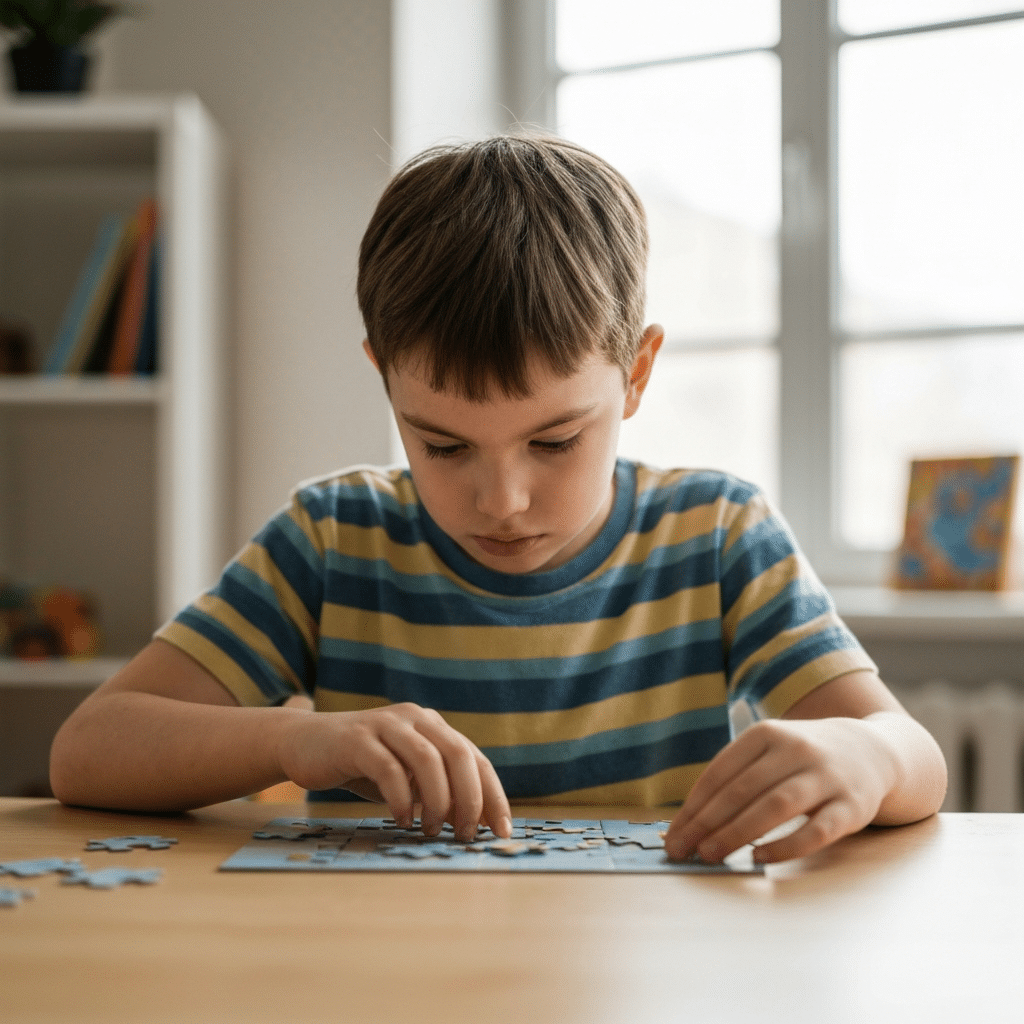
Many autistic children have:
- Strong focus and deep interests.
- Honesty and directness.
- Creative problem-solving.
- A sensitive sense of fairness or justice.
They may also struggle with:
- Sensory overload (noise, lights, smells, textures).
- Changes in routine or unexpected events.
- Social communication and reading social cues.
- Meltdowns or shutdowns when overwhelmed.
When you see autism this way, parenting an autistic child becomes less about fighting against your child’s brain and more about learning how their brain works.
Tip for your blog: here you can link words like “autism spectrum disorder overview” to an official source such as the CDC or your country’s health authority.
Parenting an Autistic Child: What Changes, What Stays the Same
A diagnosis can feel huge, but it doesn’t change who your child is at their core. They are still the same person who laughs at the same jokes, loves the same games, and cuddles (or doesn’t cuddle) in their own way.
What changes when you are parenting an autistic child:
You have a name for what you’re seeing.
You can look for specific supports and accommodations.
You can adjust your expectations based on how your child’s brain works, not on what other children are doing.
What stays the same:
Your love and bond with your child.
Their personality, interests, and unique way of seeing the world.
Your right to ask questions, seek second opinions, and advocate.
You’re not starting from zero. You’re simply adding a new layer of understanding to the relationship you already have.
Your Emotional Journey After Diagnosis

Normalizing Shock, Fear, and Guilt
When professionals first mention autism, many parents feel an emotional earthquake. Parenting an autistic child often begins with a storm of feelings:
Shock: “Autism? That can’t be right.”
Denial: “Maybe they’ll grow out of it. Maybe it’s just a phase.”
Fear: “What will happen to my child? Will they ever be happy or independent?”
Guilt: “Did I do something wrong during pregnancy or early childhood?”
Anger: “Why didn’t anyone notice earlier? Why isn’t there more support?”
These feelings are not signs of a bad parent. They’re signs that this is big and unexpected. You are grieving the picture you had in your mind about your child’s future and that’s okay.
Some gentle ways to support yourself:
- Allow yourself to cry or feel upset without judging yourself.
- Talk to someone you trust who won’t minimize your feelings.
- Ask the doctor or psychologist to repeat information or write it down.
- Read reliable sources in small doses instead of staying up all night doom-scrolling.
Guilt and Self-Blame: “Is This My Fault?”
Many parents secretly worry: “Maybe I caused this. Maybe if I had done X or avoided Y, my child wouldn’t be autistic.”
Current research suggests that autism has a strong genetic component, combined with complex biological and environmental factors. It is not caused by being too strict, too soft, working outside the home, breastfeeding or not breastfeeding, or letting your child watch cartoons.
Parenting an autistic child means shifting from “What did I do wrong?” to “What can I do now to support my child?” Blaming yourself won’t change anything. Learning, adapting, and loving your child as they are will.

Moving From “Fixing” to Supporting
At the beginning, many parents think in terms of fixing:
“How do we make the autism go away?”
“How do we fix this behavior?”
“How do we make them act like other kids?”
Over time, parenting an autistic child often means adopting a new mindset:
“How can I make the world less overwhelming for my child?”
“What helps my child feel safe enough to learn and connect?”
“How do I work with my child’s brain instead of against it?”
A neurodiversity-affirming view says: autism is a valid way of being human. Autistic people don’t need to be “cured” to have meaningful lives. They need understanding, acceptance, and accommodations.
- That doesn’t mean you ignore real challenges. It means you:
- Support communication (spoken or alternative).
- Teach practical skills at your child’s pace.
- Respect stimming (repetitive movements) and special interests when they’re not harmful.
Giving Yourself Permission to Learn
No one is born knowing how to parent an autistic child. You are learning a new language, culture, and operating systeme, all at once. You are allowed to be a beginner.
Some reminders for this stage of parenting an autistic child:
- You will make mistakes. Everyone does.
- You can apologize to your child and try again. That, in itself, is powerful modeling.
- You don’t have to follow every piece of advice. You can choose what fits your values and your child.
- You can change your mind when you learn new information.
- You are not behind. You are on your own timeline, with your child.
FAQ About Parenting an Autistic Child: Understanding & Emotions
What does parenting an autistic child really involve?
Parenting an autistic child means learning how your child’s brain works and adapting your expectations and environment to support them. It often includes understanding sensory needs, communication differences, and a strong need for routine. It can be challenging at times, but it also brings many moments of deep connection, growth, and pride.
How can I tell if my child might be autistic?
Every child is different, but some early signs can include limited eye contact, delayed speech, intense interests, repetitive movements, or strong reactions to noise and textures. If you’re wondering about parenting an autistic child in the future because you see these signs, talk to your pediatrician or a developmental specialist for a proper assessment instead of self-diagnosing.
Did I do something wrong to cause my child’s autism?
No. Current research shows that autism has a strong genetic component and is not caused by your love, effort, or parenting style. Parenting an autistic child is not a punishment or a sign that you failed. Your role now is to understand your child’s needs and advocate for them, not to blame yourself.
How do I handle the shock and grief after my child’s diagnosis?
It’s common to feel shock, sadness, fear, or even grief after a diagnosis. Parenting an autistic child often starts with an emotional storm. Give yourself time to process, talk to supportive people, and seek professional help if needed. Your feelings are valid, and taking care of your emotional health will make you a stronger, more present parent.
Should I tell friends and family that my child is autistic?
That’s a personal decision. Many parents find that parenting an autistic child becomes easier when close family and friends understand what’s going on and how to help. You can start by sharing simple information about autism and what your child finds challenging or comforting. If some people are not supportive, you can choose how much you share with them in the future.
Can my autistic child have a happy and meaningful life?
Yes. Many autistic people lead fulfilling lives, have relationships, careers, and deep interests. Parenting an autistic child is not about removing autism; it’s about helping your child access support, feel safe, and develop skills in a way that fits who they are. Happiness may look different from what you first imagined, but it is absolutely possible.
Looking Ahead: You Are Not Alone
Even if you feel isolated right now, many other parents are walking a similar path. There are:
- Local and online parent support groups.
- Autistic adults sharing their experiences.
- Therapists and coaches who understand autism and family systems.
- School teams willing to collaborate when they’re given the right information.
Parenting an autistic child is not about being perfect. It’s about showing up, asking for help when needed, and staying curious about who your child is becoming.
You might link here to a parent support organization or a directory of local autism services in your country.
At the end of this first part, you might tell yourself:
“I don’t have all the answers yet. But I am learning, and I am not alone in parenting an autistic child.”
In Part 2 of this trilogy, we’ll dive into practical, everyday strategies for parenting an autistic child, routines, sensory needs, communication, and school.
Helpful Resources for Parents of Autistic Children
You might like to explore:
CDC-Autism Spectrum Disorder: general information, signs, screening, and resources for families.
NIMH-Autism Spectrum Disorder: research-based overview and treatment information.
Autistic Self Advocacy Network (ASAN): autistic-led organization with guides for parents and allies.
Reframing Autism-Parenting an Autistic Child: practical, autistic-affirming parenting perspectives.